Fits, threads and sealing faces
Mark finished limits and surfaces that must remain uncoated. Depending on access and accuracy, OUJI uses masking plugs, hand-applied masking compound or selective machining after finishing with a planned allowance.

Machining & finishing, planned together
The finish, the fit and the acceptance criteria — in one manufacturing plan.
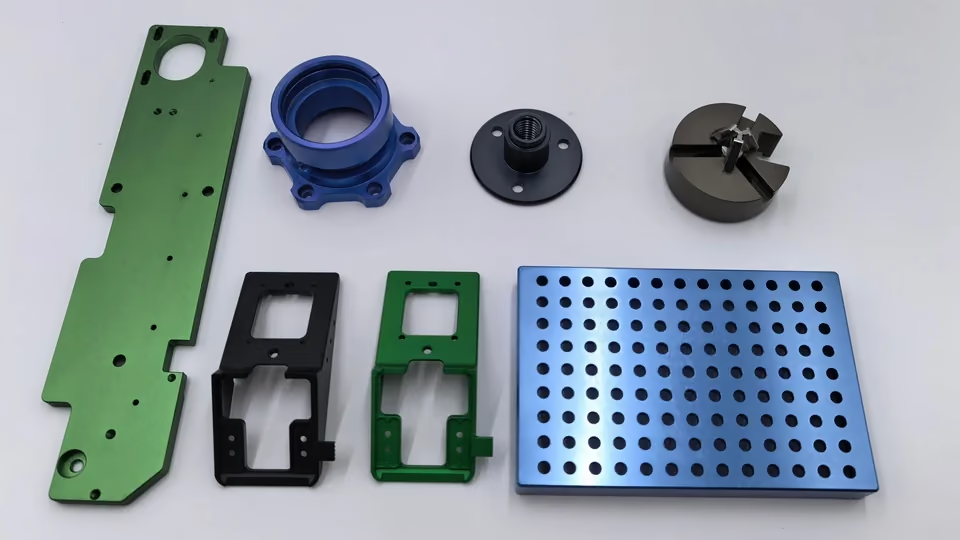
OUJI coordinates anodizing, plating, passivation and mechanical finishing for custom metal parts. We review the drawing, work with specialist finishing partners and agree how the finished part will be accepted.
Response within 24 hours of receiving complete project details.
Before selecting a finish
Select by function
Start with corrosion, wear, appearance or electrical contact requirements. These options guide a drawing review; the material grade, geometry and applicable specification determine the final route.
Tap a finish for its purpose and quotation requirements.
Show fewer finish details| Finish | Typical materials | Why consider it | Confirm in your enquiry |
|---|---|---|---|
| Anodizing | Aluminum | Corrosion protection with natural or dyed appearance. | Type, thickness, color reference, sealing and areas to keep uncoated. |
| Hard anodizing | Aluminum | A wear-focused anodic coating for working surfaces. | Alloy, coating specification, final fits and acceptable color variation. |
| Electroless nickel | Aluminum, steel, brass | Wear and corrosion protection with relatively uniform coating build. | Thickness, deposit specification, post-treatment and critical bores or threads. |
| Zinc plating | Carbon steel | Corrosion protection for steel components. | Coating and passivate requirements, thickness and any corrosion-test criteria. |
| Passivation | Stainless steel | Removal of free iron and support for corrosion resistance. | Stainless grade, process standard and required verification; not a color coating. |
| Powder coating | Aluminum, steel | A protective colored finish for visible surfaces. | Color, gloss, texture, film thickness and masking of fits or contact points. |
| Black oxide | Carbon and tool steel | A dark, low-glare finish with light corrosion protection. | Base material, oil or wax treatment and the service environment. |
| Bead blasting | Suitable metals | A matte texture and reduced visibility of machining marks. | Texture reference, protected surfaces and any subsequent protective coating. |
| Brushing & polishing | Stainless steel, aluminum, brass | Directional grain or a smoother appearance. | Grain direction, cosmetic faces, edge preservation and roughness where functional. |
Need conductive surfaces or a specified plating stack? Flag contact faces and the layer specification. Our published RF housing project used silver plating over a copper undercoat.
See the plating projectProtect what makes the part work
A finish can change a bore, a thread or a mating surface. Define the condition that must be accepted after finishing, so the machining allowance and process sequence support it.

Mark finished limits and surfaces that must remain uncoated. Depending on access and accuracy, OUJI uses masking plugs, hand-applied masking compound or selective machining after finishing with a planned allowance.
In this prototype, OUJI anodized the part first, then located it in a second setup to machine the specified bare-aluminum surfaces. The route addressed the customer’s edge appearance and dimensional requirements.
Read the selective-machining caseOur repeat-production case includes a published drawing excerpt requiring dimensions after anodizing. It documents the requirement and machining approach; numerical batch results are not published.
View the drawing and process caseDocumented OUJI experience
The requirement covered appearance inside the cavities and on the exterior. The project shows how OUJI worked through finishing trials with specialist suppliers.

From trial finish to accepted parts
This record supports the finish-approval process. It does not publish numerical coating thickness or RF performance results.
View trial photos, inspection and the full projectAgree the evidence before production
OUJI coordinates the machining route, finishing requirements and agreed final inspection. Specialist partners carry out the relevant finishing processes. Define acceptance before work starts.
Agree: Finished limits, datums, protected features and sampling.
Verify: Appropriate gauges, micrometers or CMM evaluation for the specified features.
Agree: Visible faces, color range, gloss or texture, viewing conditions and allowed contact marks.
Verify: Visual comparison with an agreed sample or acceptance reference.
Agree: Applicable specification, thickness range, measurement locations and method.
Verify: Coating-thickness checks appropriate to the substrate and coating; report scope agreed in advance.
Agree: Adhesion, corrosion or other testing only where specified, including the method and acceptance criteria.
Verify: Specialist testing and certificates arranged to the quoted scope; external cost and timing confirmed separately.

Prepare your enquiry
Send the information you have. If the finish is not yet fixed, tell us how the part will be used. Details already on the drawing do not need to be entered again.
Send your part for reviewFiles can follow by email. For an NDA before sharing, contact our team.
Response within 24 hours of receiving complete project details. The finishing route, acceptance scope, price and delivery timing are confirmed after drawing review.
Specialist testing, sample approval and finishing schedules are included in the review where required.
Before you order
Related manufacturing routes
Yes. Send the part drawing, material, quantity and finishing requirements as one enquiry. OUJI coordinates machining, specialist finishing partners and agreed finished-part inspection. The quotation confirms the process route, acceptance scope, price and delivery timing.
Yes. OUJI plans machining and finishing together to meet the specified final dimensions after drawing and process review. Depending on the part, we use masking plugs, CNC machining of selected features after finishing with a planned allowance, or hand-applied masking compound for complex areas. The choice considers appearance, re-clamping accuracy and access for a second cut. Racking contact points and complex cosmetic requirements are confirmed with you before finishing.
There is no single allowance for every finish. Deposited coatings add material, while anodizing involves both oxide growth and substrate conversion. State the finished limits on the drawing. OUJI reviews the actual coating specification, masking and machining sequence before agreeing the allowance.
Agree an acceptable color range and reference sample before production. Alloy, surface preparation and anodizing conditions can affect appearance, so a screen image or color name alone is not a complete acceptance standard. Identify parts that must match when assembled.
Yes. OUJI can supply finished samples that include your specified machining, surface treatment and other requirements for approval before batch production. You pay a sample fee, which can be credited against the subsequent production order.
No. Specify the required standard, test method, acceptance criteria, sampling and documents in the enquiry. OUJI confirms the inspection and reporting scope during quotation. External tests and specialist-process schedules are quoted separately.